
Theory of Change
Teacher Skills & Knowledge
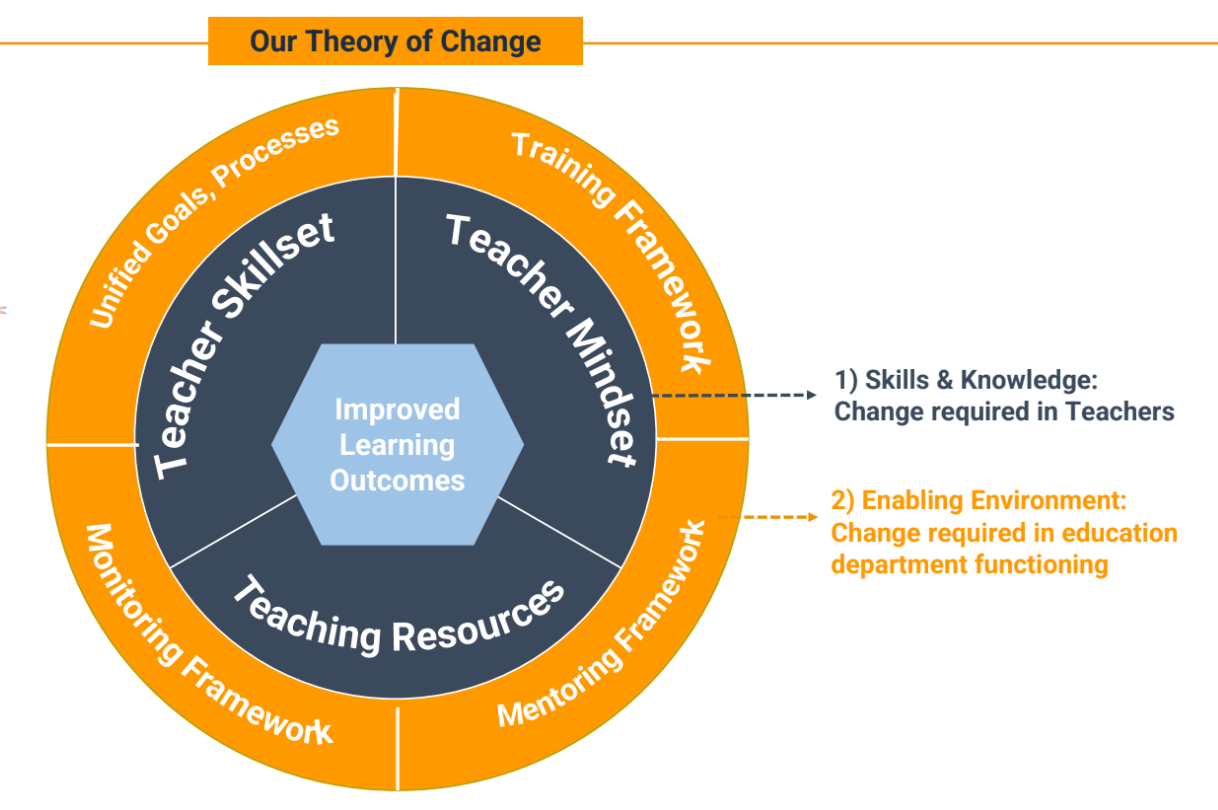
Teachers are the primary change agents in improving learning outcomes. Meaningful classroom transformation requires educators to build not only the skills to facilitate experiential learning, but also the resources, mindset, confidence, conviction, and ownership needed to sustain these practices in everyday teaching. When teachers experience inquiry, reflection, collaboration, and participatory learning themselves, they are more likely to create classrooms where students actively think, question, and engage.
Enabling Environment for Scale
Sustained transformation requires an enabling institutional environment that supports and reinforces teacher practice. Shared goals across education departments, district leadership, and school systems create the foundation for aligned training, mentoring, monitoring, and process enhancement. Structured implementation frameworks, continuous support systems, and reflective practice help translate experiential learning from policy vision into consistent classroom reality at scale.

Teacher Training
Transforming classrooms requires more than introducing new teaching methods. It requires building the capacity, confidence, and mindset of the people who shape learning every day.
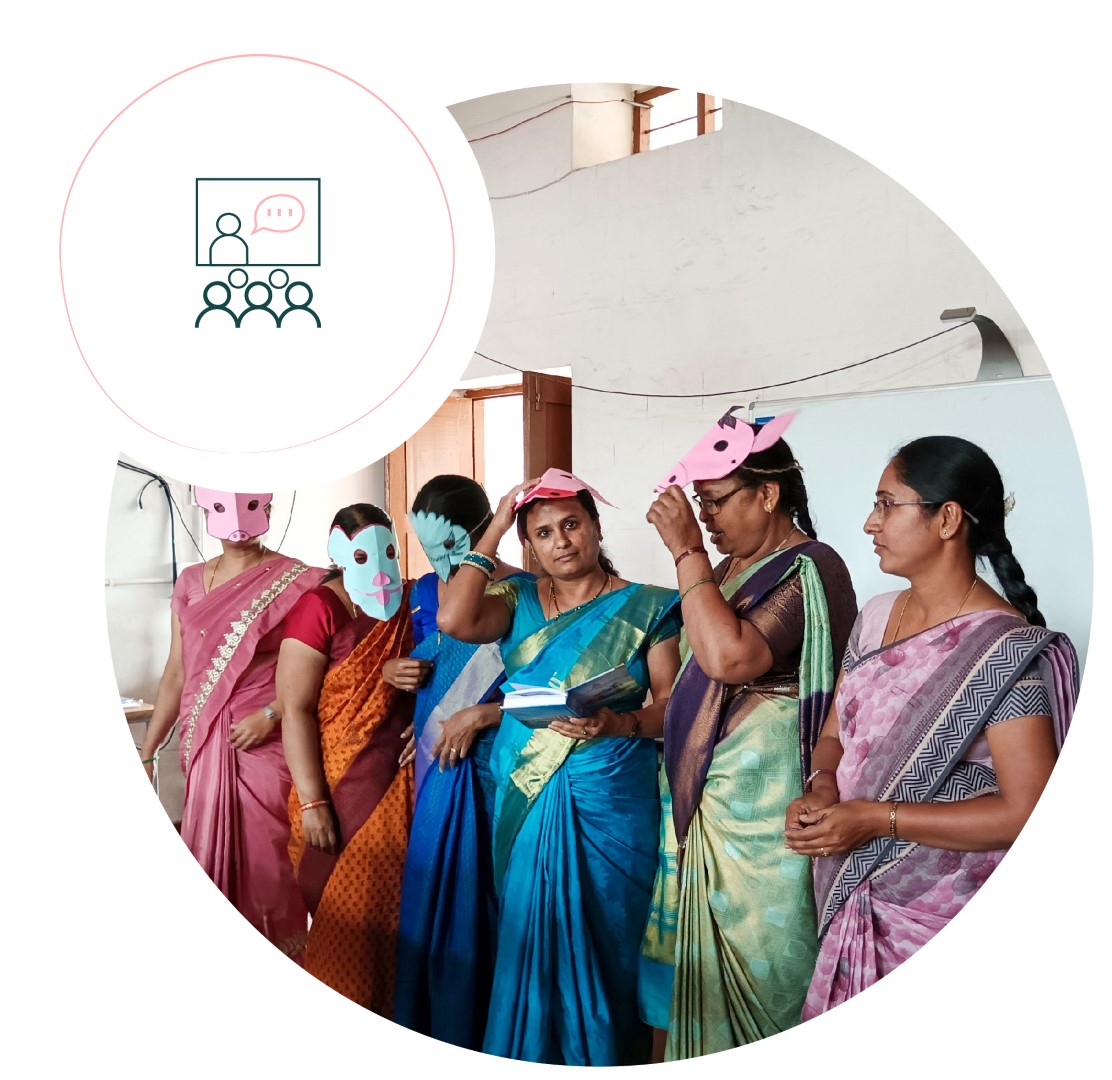
Our training and development programmes equip teachers and education leaders with the skills, pedagogy, and practical tools needed to make classrooms more experiential, interactive, and learner-centered.
Through hands-on workshops, collaborative learning environments, and continuous mentoring, we support teachers in integrating experiential practices into everyday classroom teaching while strengthening peer learning communities at the local level. We also work closely with education department officials, enabling them to serve as academic mentors and implementation partners who can guide, support, and sustain experiential learning practices across schools and districts.
Experiential Teaching Content
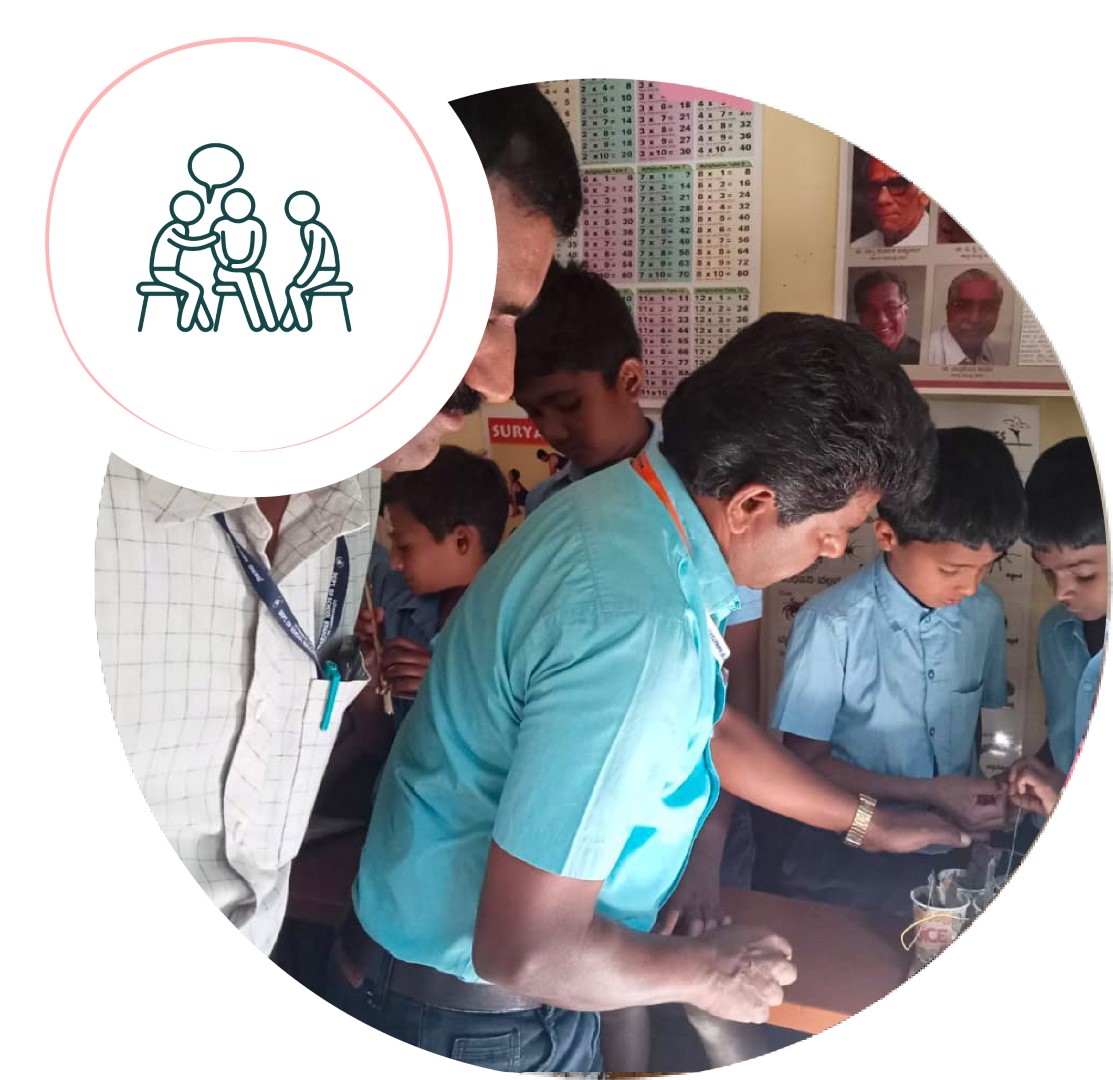
Our NCERT-mapped experiential teaching and learning content equips teachers to seamlessly integrate hands-on, activity-based methods into everyday classroom practice.
Through lesson plans, project-based learning modules, explainer videos, and Bloom’s Taxonomy-aligned worksheets, concepts are connected to real-life experiences in ways that make learning more participatory, engaging, and meaningful for children. Designed for government school contexts, our multilingual content is rooted in local realities and culturally relevant examples. Built on a low-cost, no-cost philosophy, the learning activities use simple materials commonly available in rural homes, hostels, and classrooms, making experiential learning practical, scalable, and accessible.
Technology
Teachopia extends experiential learning support beyond workshops and into everyday classroom practice. Designed as a mobile-first platform for government school ecosystems, Teachopia gives teachers and education leaders easy access to multilingual experiential learning resources, training content, classroom tools, and implementation support directly on their phones. Through NCERT-mapped lesson plans, worksheets, explainer videos, project-based learning modules, and interactive content, the platform helps teachers continuously apply experiential methods in their classrooms with confidence and consistency.
Teachopia also enables education department officials to monitor implementation, support teachers through mentoring structures, and strengthen adoption at scale across schools and districts.
By making quality teaching-learning resources easily accessible in low-resource contexts, Teachopia helps create a scalable and sustainable ecosystem for experiential learning.
Scaling Through Systems
Our programmes are designed to integrate seamlessly within existing public education systems, making experiential learning scalable, sustainable, and institutionally embedded.
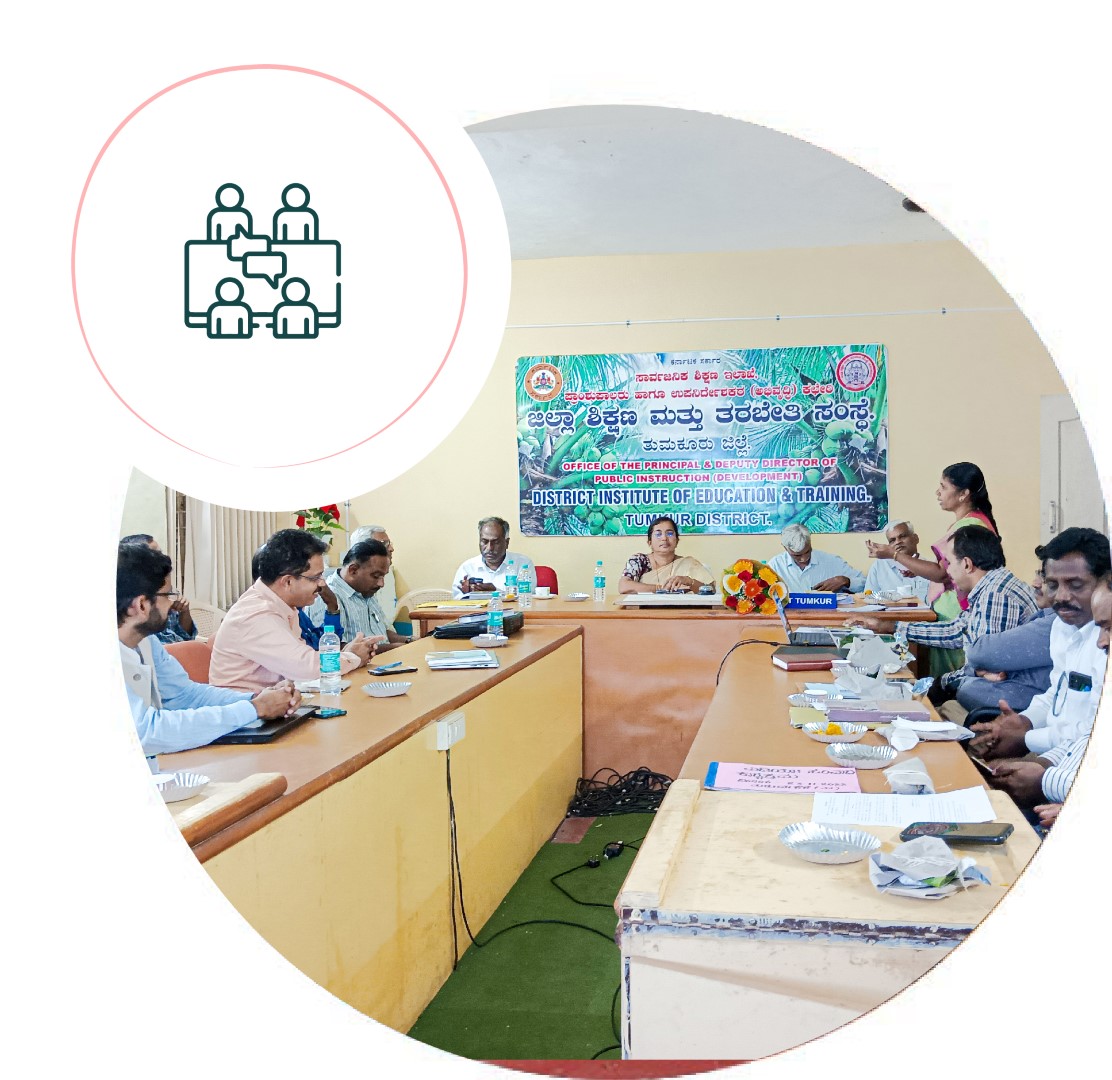
We work across the education ecosystem—from schools and clusters to districts and state-level institutions—partnering closely with education departments to strengthen classroom learning through systemic implementation.
Together with education leaders and officials, we support the development of mentoring structures, monitoring frameworks, leadership capabilities, and data-informed processes that enable continuous improvement in teaching and learning outcomes.
By aligning with existing government structures and priorities, we help create enabling environments where experiential learning can be consistently practiced, supported, and sustained at scale.